


Noureen Chaudry
Some journeys are measured in kilometres, while others are measured by the experiences, friendships, knowledge, and memories they leave behind. My recent visit to China to attend the 2026 Media Cooperation Forum on Belt and Road was undoubtedly one of the most extraordinary journeys of my professional and personal life. The prestigious event was jointly hosted by People’s Daily and the People’s Government of Fujian Province. It was not simply a visit to another country; it was an experience that broadened my horizons, enriched my understanding, and left me with memories that I will cherish for years to come.
As a Pakistani journalist , I have always believed that journalism is more than reporting events. It is about connecting people, building bridges between societies, sharing perspectives, and bringing nations closer through meaningful communication. Having spent considerable time writing about CPEC, Pakistan-China relations, regional connectivity, and development cooperation, the opportunity to visit China and participate in an international media gathering was particularly meaningful to me.
From the moment I arrived in China, I felt a sense of excitement and curiosity. Everything seemed to offer something new to discover. The country’s modern infrastructure, impressive urban development, organized environment, technological advancement, cultural richness, and the warmth of its people made a lasting impression on me. What I had previously read about, discussed, and written as a journalist was now becoming a personal experience. It was fascinating to observe a country beyond newspaper headlines, television screens, and official reports.
The forum brought together more than 200 representatives of media organizations and other institutions from around 100 countries, alongside representatives of international and regional organizations, including the Shanghai Cooperation Organisation (SCO).

Its theme, “Pursuing Common Understandings and Aspirations: A Decade of Belt and Road Media Cooperation,” reflected the importance of communication, collaboration, and mutual understanding in an increasingly interconnected world.
For me, being part of such a distinguished international gathering was an honour. Sharing the same platform with journalists, media executives, communication experts, and representatives from different parts of the world was an enriching experience. Every interaction offered an opportunity to understand different perspectives, learn about international media practices, and explore the common responsibilities of journalism in today’s rapidly changing world.
The opening ceremony was particularly impressive, with distinguished speeches from senior Chinese officials and international representatives. Among the prominent speakers were Xian Hui, Vice Chairperson of the National Committee of the Chinese People’s Political Consultative Conference; Hu Heping, Executive Deputy Head of the Publicity Department of the CPC Central Committee; Zhao Long, Secretary of the CPC Fujian Provincial Committee; and Yu Shaoliang, President of People’s Daily.
International speakers included Pavel Negoitsa, General Director of Rossiyskaya Gazeta, and Oleg Kopylov, Deputy Secretary-General of the Shanghai Cooperation Organisation, along with other distinguished guests.
The presence of such high-level representatives demonstrated the importance attached to media cooperation as an essential component of international engagement.
One of the central themes of the discussions was the significance of the Belt and Road Initiative, launched by Chinese President Xi Jinping in 2013.
In her address, Xian Hui highlighted the initiative’s growing international significance, describing it as a major platform for international economic cooperation in terms of its scale, geographical reach, and influence.
She also referred to the guidelines outlined by President Xi Jinping at the SCO Summit in Bishkek in September 2026: prioritizing development, ensuring security as a key condition, adopting a people-centred approach, and relying on dialogue and consultations.
These principles provided an important perspective on the future direction of high-quality Belt and Road cooperation. They also reflected the experience of the Shanghai Cooperation Organisation over its 25-year journey.
As a journalist who has closely followed the development of CPEC and Pakistan-China relations, these discussions were particularly relevant to my professional interests. The Belt and Road Initiative is not merely about roads, ports, railways, or infrastructure. It is also about creating opportunities for economic cooperation, cultural exchange, regional connectivity, and people-to-people relationships.
For Pakistan, CPEC represents an important dimension of this broader vision. It has opened discussions about infrastructure, energy, trade, industrial development, agriculture, technology, and regional connectivity. Being present at a forum where the wider international dimensions of this initiative were discussed gave me a renewed appreciation of the importance of documenting these developments through responsible journalism.
The discussion highlighted something that I strongly believe as a journalist: media cooperation is essential in a world where information travels across borders within seconds, but understanding between societies does not always develop at the same speed.
The responsibility of modern journalism is not limited to delivering breaking news. It also involves presenting balanced perspectives, challenging misinformation, promoting dialogue, and helping people understand developments beyond their own national boundaries.
In this context, international media forums provide valuable opportunities for journalists to exchange experiences, build professional relationships, and develop a broader understanding of global affairs.
One of the most rewarding aspects of my visit was meeting media professionals and delegates from different countries and cultures.
There is something truly special about bringing together people who may speak different languages, belong to different societies, and work in different media environments, yet share a common professional purpose.
Our conversations were not limited to journalism alone. We exchanged views about our countries, cultures, traditions, development priorities, and the challenges facing modern societies. These interactions reminded me that personal connections are often the foundation of meaningful international cooperation.
The experience also strengthened my belief that journalists can play an important role in reducing misunderstandings between nations. A meaningful story can introduce one society to another, challenge stereotypes, and create an opportunity for people to discover their shared aspirations.
For me, these encounters were among the most memorable moments of the entire journey.
A conference can provide knowledge, but visiting a country offers something more personal: the opportunity to observe, experience, and understand.
China left a remarkable impression on me through its infrastructure, urban development, technology, cultural heritage, and the overall organization of daily life. The combination of modern achievements and traditional culture was particularly fascinating.
The hospitality of the Chinese people, their welcoming attitude, and the thoughtful arrangements throughout the visit made the experience even more special.
I also enjoyed the opportunity to explore Chinese culture, experience local hospitality and food, and appreciate the country’s rich cultural identity. Every new encounter added another dimension to my understanding of China.
As a journalist, I found this direct experience particularly valuable. There is a significant difference between writing about a country based on available information and experiencing its environment firsthand. Such visits provide a more complete perspective and help journalists develop stories with greater depth and understanding.
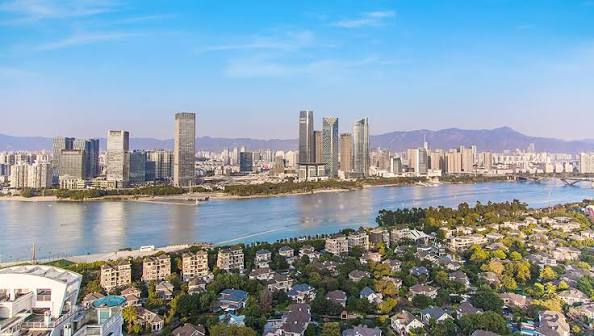
Fuzhou itself became a memorable part of this journey. The city offered an opportunity to appreciate the character of Fujian Province while participating in an international event focused on the future of cooperation.
My visit also carried a special meaning because of the longstanding friendship between Pakistan and China.
For decades, the two countries have maintained close relations across diplomacy, trade, infrastructure, education, defence, culture, and people-to-people exchanges. The 75th anniversary of diplomatic relations in 2026 makes this relationship particularly significant.
As someone who has written extensively about Pakistan-China relations and CPEC, I returned with a stronger sense of the responsibility that comes with being a journalist.
I believe our media organizations should continue highlighting not only official engagements and major development projects but also the human stories behind these partnerships: students pursuing educational opportunities, farmers benefiting from agricultural cooperation, entrepreneurs exploring new markets, communities experiencing development, and people building friendships across borders.
These are the stories that give international relations a human face.
The forum also reinforced my understanding of the changing responsibilities of media in the digital and artificial intelligence era.
Today, journalism is undergoing a profound transformation. Social media, artificial intelligence, digital platforms, and emerging technologies have changed how information is produced, distributed, and consumed.
While these developments offer unprecedented opportunities, they also bring challenges involving misinformation, credibility, digital responsibility, and the preservation of professional journalistic standards.
In such an environment, international media cooperation is increasingly important. Journalists and media institutions must learn from one another, exchange professional experiences, and work towards more responsible and constructive global communication.
I returned with a renewed belief that media should serve as a bridge rather than a barrier, promote understanding rather than division, and provide people with reliable information that helps them make sense of an increasingly complex world.
No memorable journey is complete without acknowledging the people who make it possible.
I am sincerely grateful to People’s Daily, the People’s Government of Fujian Province, and all the organizers for inviting me and providing such a valuable opportunity to participate in this international gathering.
Their hospitality, professional arrangements, and warm welcome made the experience even more rewarding.
I returned to Pakistan with beautiful memories, new friendships, valuable professional connections, fresh ideas, and a deeper appreciation of the importance of international media cooperation.
This was not simply another international trip for me. It was an opportunity to represent my country, engage with the global media community, learn from different cultures, and strengthen my commitment to journalism as a tool for understanding and cooperation.
Some journeys take us to new destinations, while others take us to new dimensions of thought and experience. My visit to China was both.
It was wonderful, inspiring, enriching, and truly out of this world. The experience will remain one of the most beautiful chapters of my professional journey.
As I look back, one thought stays with me:
Borders may divide geographical territories, but stories, friendships, and shared aspirations have the power to bring people together. And that, perhaps, is the greatest achievement of international media cooperation.


