
Zohaib Hussain:
It is a sobering reality that CPEC 2.0 has proceeded at a glacial pace, hampered by a nexus of complex structural impediments. Yet, the churning dynamics of regional geopolitics and geo-economics have furnished it with a renewed golden opportunity. This moment offers the potential to catalyze greater regional connectivity, socio-economic integration and industrial cooperation, creating a compelling value proposition for all stakeholders and power brokers alike.
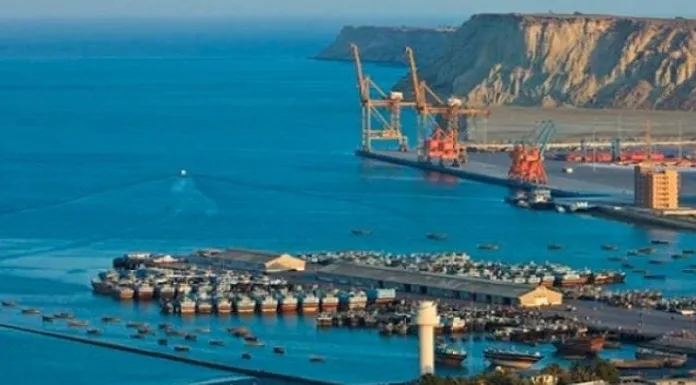
A promising development is the rapid emergence of Gwadar Port as a pivotal regional trade and logistics node. This is accelerated by realigning geopolitical vectors and geo-economic constraints, as growing instability in the Middle East reshapes the architecture of international trade routes. The ongoing kinetic conflict between Iran and the US and its consequent disruption of maritime commerce, has amplified interest in Gwadar as a secure and alternative gateway. This strategic window must be leveraged post-haste.
From a realist perspective, the US-Iran conflict has disrupted established shipping routes through Iranian, Emirati and other regional ports while exposing the Strait of Hormuz’s chokepoint vulnerability, prompting global supply chain diversification. In this shifting geopolitical landscape, Gwadar’s strategic location on the Arabian Sea has gained renewed significance, positioning Pakistan as an alternative trade corridor and transit hub for the uninterrupted movement of hydrocarbons, LNG, food commodities and other maritime trade.
This viability is empirically supported by recent logistical operations: Pakistan’s six overland routes to Iran have facilitated the movement of hundreds of stranded containers onward to China and Central Asia. Three of these routes crossed from Gabd in Gwadar to Rimdan in Iran, validating the geographical indispensability of Balochistan and Gwadar in trans-Eurasian connectivity.
The Gwadar project is conceived as an integrated trade ecosystem, linking a deep-sea port, a greenfield airport, a road network and a special economic zone (SEZ). Although it has been operational since the early 2000s, with the first berthing in 2008, its commercial throughput has remained sub-optimal.
Regrettably, Gwadar’s stunted growth trajectory, stemming from the fluid security paradigm in Balochistan, has failed to provide foreign investors with a business-friendly environment. Furthermore, the delays in operationalizing the SEZ are critically hindering its full commercial activation and value-chain integration.
Clearly, Gwadar has become a new flashpoint on the global trade radar and requires aggressive marketing and commercialization. Pakistan’s policymakers must further hardwire its trans-regional connectivity with the Central Asian Republics (CARs), focusing on energy trading corridors for cost-effective oil and gas.
Given the gravitas of regional power politics marked by the twilight of Iran’s historic romance with India and Pakistan’s own erosion of the so-called “strategic depth” paradigm in Afghanistan the country has a strategic opening to instrumentalize Gwadar as a conduit to reach Central Asia via Iranian territory.
Recently, Pakistan’s government has extended an offer to the CARs, notably Uzbekistan and Kazakhstan, granting priority access to Gwadar and Karachi ports to deepen bilateral trade flows and industrial symbiosis.
According to media reports, for the first time in over a decade, the country handled six transshipment cargoes, fueling optimism that Gwadar Port could mature into a major regional shipping hub within a five-year cycle.
It is an auspicious development that the Gwadar Port Authority is considering reviving the proposed 100,000-acre (40,500-hectare) Oil City, envisaged as a strategic storage and downstream petrochemical hub for Saudi Arabia, China and the wider region. Under the CPEC framework, Gwadar was originally conceived as a petrochemical and energy hub, with expanded storage, refining and blending facilities to strengthen Pakistan’s energy security while serving regional markets. Reinforcing this potential, 21 international shipping companies and six countries have recently sought to commence operations through Gwadar Port, reflecting growing confidence in its commercial viability and strategic importance.